 ultimate-guide
Cottagecore Home Decor Style Guide 2026
Last Updated: October 23, 2026
Quick Summary
Cottagecore home decor is a rural-inspired interior style built on nostalgia, simplicity, and comfort, mixing vintage furniture, natural materials, soft florals, and handmade details for rooms that feel peaceful rather than polished. In 2026 it favors muted earthy tones, layered textures, and collected pieces over matching sets.
- Cottagecore welcomes mismatched antiques and faded florals, while farmhouse leans on crisp whites and matching sets.
- The 2026 palette favors warm cream, sage, clay, faded rose, oatmeal, and soft brown.
- Pick one hero pattern per room and support it with texture rather than more print.
- A weekend plan: swap pillows, add a woven layer, bring in one vintage piece, soften lighting, add something living.
- Renters should plan storage first, then textiles, then one natural-material piece, then collected objects.
Table of Contents
- What Cottagecore Home Decor Means in 2026
- The 2026 Cottagecore Color Palette and Patterns
- Natural Materials and Textiles: Wood, Wicker, and Woven Layers
- Cottagecore Living Room Ideas You Can Copy This Weekend
- Cottagecore Decor on a Budget: Sourcing, Vintage, and DIY
- Autumn Cottagecore Decor: Layering for the Colder Months
- Renters, Small Spaces, and Low-Maintenance Alternatives
- Conclusion
- Frequently Asked Questions
What Cottagecore Home Decor Means in 2026
Cottagecore home decor is a rural-inspired interior style built on nostalgia, simplicity, and comfort. It mixes vintage furniture, natural materials, soft florals, and handmade details to create rooms that feel peaceful rather than polished.
The aesthetic has shifted since its early days. According to Country Living's report on cottagecore's evolution, the look is branching into cozier relatives: burrowcore, clovercore, meadowcore, and quaint maximalism. Layered textures, calm colors, and spaces designed for connection define the current version, per Midwest Design Magazine's 2026 interiors forecast.
Below, we break down what defines cottagecore home decor in 2026, room by room, with budget and renter options included.
Cottagecore vs. Farmhouse: The Real Difference
Cottagecore is softer, older, and more collected than modern farmhouse. Farmhouse leans on crisp whites, matching sets, and clean lines. Cottagecore welcomes mismatched antiques, faded florals, visible wood grain, and a little charming wear.
A common mistake is treating the two as interchangeable. Swap the matching pillows for floral block prints or toile, add a woven throw, and the room shifts toward cottage charm without a single new furniture purchase.
The 2026 Cottagecore Color Palette and Patterns
The 2026 cottagecore color palette favors muted, earthy tones: warm cream, sage, clay, faded rose, oatmeal, and soft brown. These low-contrast shades create the calm, peaceful backdrop the style depends on. Thrifty and Chic's 2026 decor trends roundup points to warm neutrals and moody tones as key directions this year, which fits cottagecore's move toward richer, cozier rooms.
Pattern is where the style gets its character. Layer two or three motifs rather than one, keeping scale varied so the room reads collected instead of chaotic.
Florals, Toile, and Botanical Motifs That Still Work
Soft florals, toile, botanical motifs, and vintage-inspired prints remain the backbone of cottagecore pattern mixing. Small-scale ditsy florals pair well with ticking stripes; toile anchors a room and works as the "loudest" element in a quiet palette.
What changed for 2026: pattern is more restrained and more personal. Instead of covering every surface, pick one hero pattern per room and support it with texture rather than more print.
Natural Materials and Textiles: Wood, Wicker, and Woven Layers
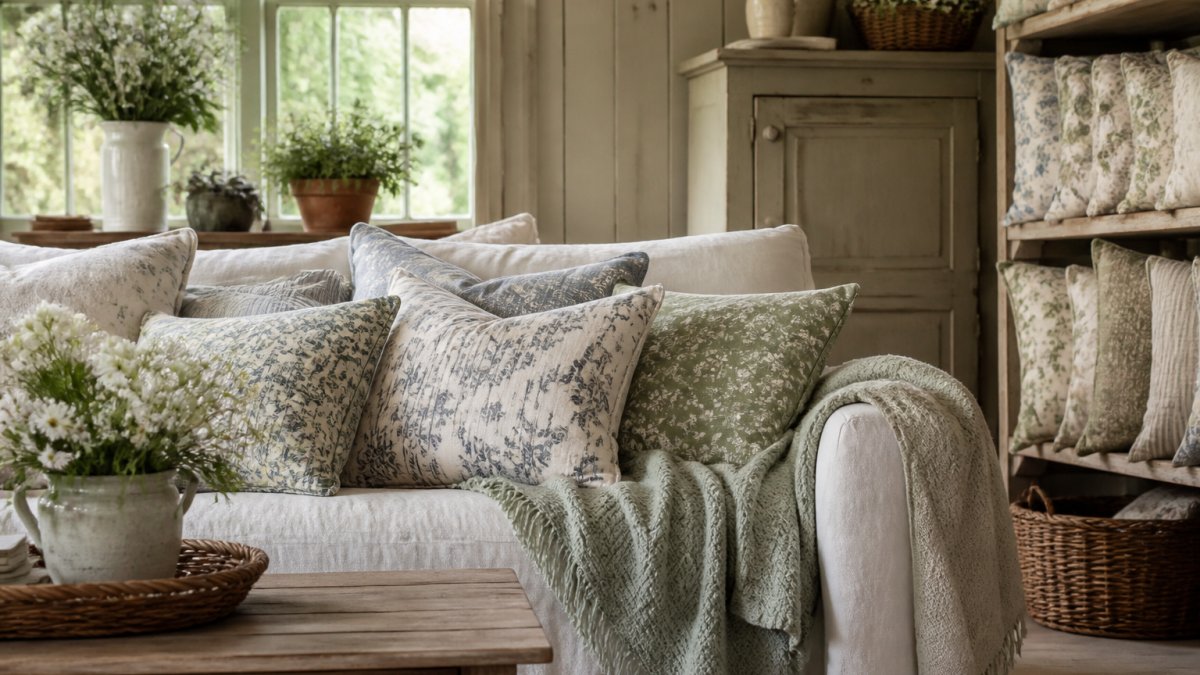
Natural materials carry cottagecore. Wood, wicker, rattan, linen, cotton, and stoneware add the tactile warmth the style is built on. Layering these textures matters more than any single piece: a wooden side table next to a wicker basket, linen cushions on a cotton sofa, a chunky knit throw over it all.
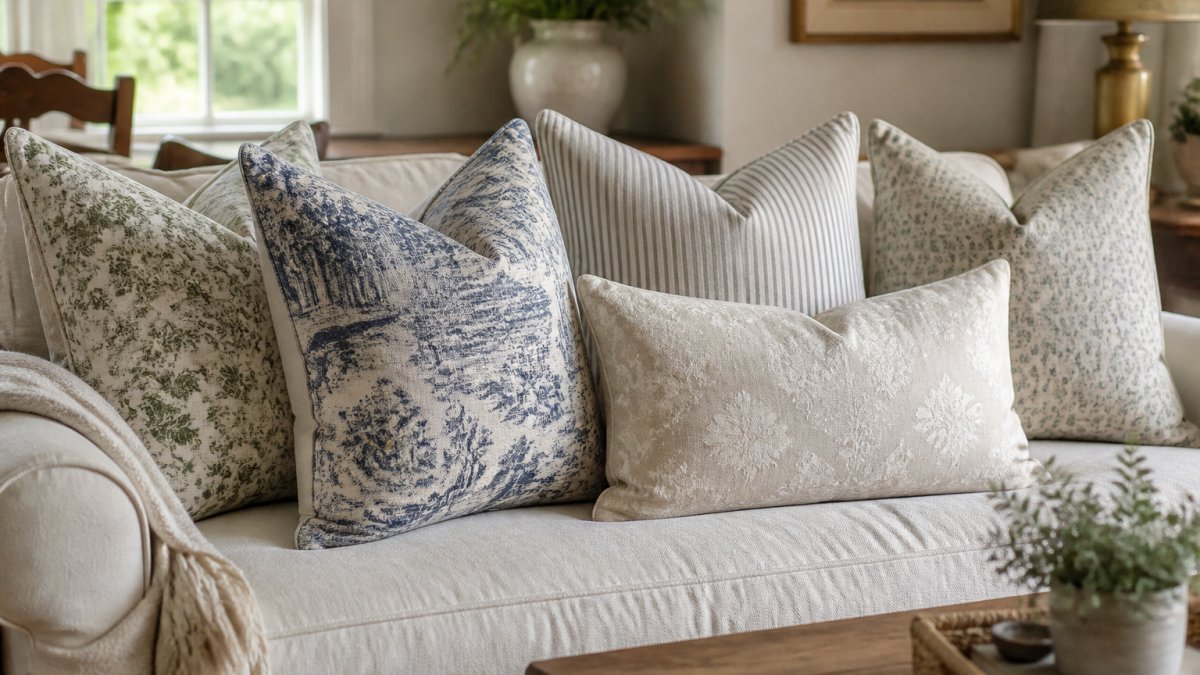
Textiles do most of the heavy lifting, which is why pillow covers are the fastest way into the look. Mixing ticking stripes, woven damask, and floral block prints on one sofa creates depth without buying furniture.
Cottagecore Living Room Ideas You Can Copy This Weekend
Cottagecore living room ideas work best as small, weekend-sized swaps rather than full redecorates. Start with textiles, add one natural material, and finish with something collected.
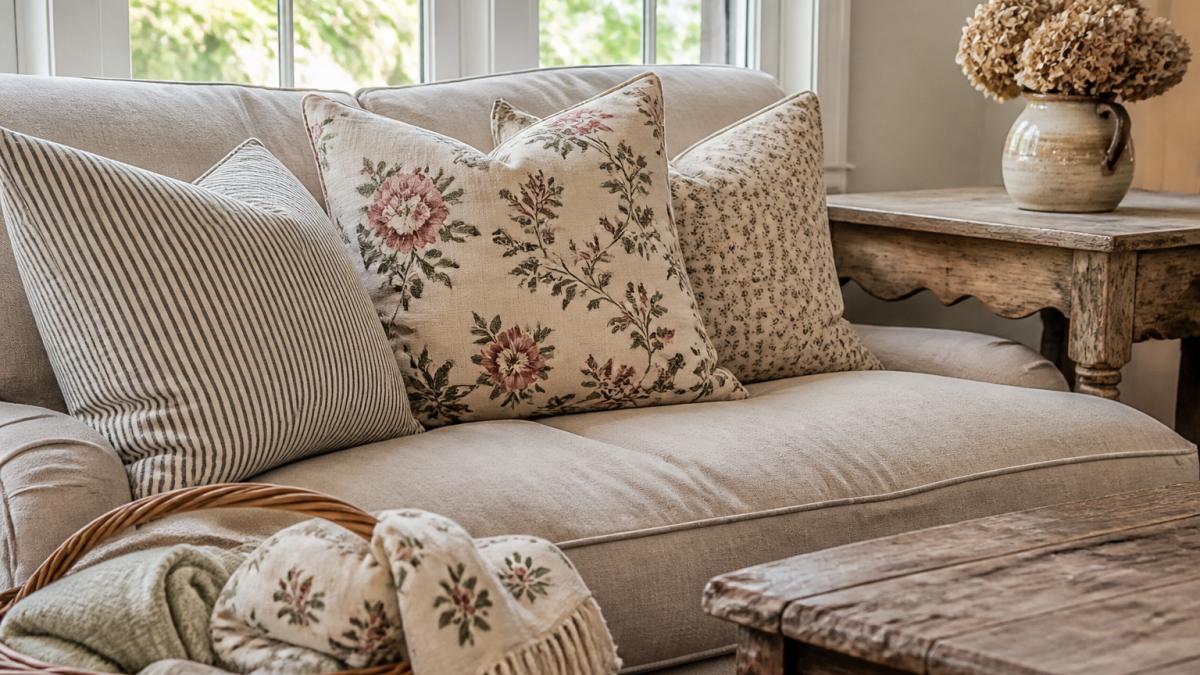
A practical weekend plan:
- Swap the pillows. Two floral block prints, one ticking stripe, one solid linen. Mix sizes.
- Add a woven layer. A wicker basket for throws, or a rattan tray on the coffee table.
- Bring in one vintage piece. An antique frame, a brass candlestick, a secondhand side table.
- Soften the lighting. A warm-toned lamp beats an overhead light for cozy atmosphere.
- Add something living. Dried stems, a fern, or a single branch in a stoneware jug.
Our mix-and-match pillow covers are designed so floral, toile, and ticking-stripe designs sit together without clashing, and double-sided prints let you change the mood by flipping a cushion.
Cottagecore Decor on a Budget: Sourcing, Vintage, and DIY
Cottagecore decor on a budget works because the style rewards age, imperfection, and patience rather than newness. The practical trick is to think in tiers: a near-zero-cost layer, a low-cost layer, and a single investment layer. Most rooms only need the first two to read cottagecore.
Tier 1: Near-zero-cost changes (under a typical takeaway coffee budget)
- Rearrange what you own. Move a wooden chair from the bedroom to the living room, group books and crockery by color, and pull one textile from a closet to a sofa arm.
- Forage and dry. Garden stems, eucalyptus, wheat, and hydrangeas dry well and cost nothing. A stoneware jug or a clean glass bottle is enough.
- Dye or overdye plain textiles. A plain linen or cotton pillow cover can be tea-stained or dyed a muted sage or clay tone with a fabric dye; test on a hidden seam first.
Tier 2: Low-cost sourcing (the main budget engine)
- Charity shops and estate sales are best for textiles, baskets, crockery, and frames. Check seams, zippers, and for musty smells before buying; washable covers are the safest buy.
- Vintage and antique shops are for one good anchor piece: a side table, a jug, a brass candlestick, or a small frame. Buy one piece you will keep rather than five forgettable ones.
- Online secondhand marketplaces are useful for specific searches ("floral pillow cover," "wicker basket," "toile fabric") but confirm dimensions and condition before committing.
Tier 3: The one investment piece
If the budget allows a single larger purchase, put it into the piece you touch most: a comfortable sofa, a sturdy wooden dining table, or a good-quality wool throw. Cottagecore tolerates wear on accessories but not on the things you use daily.
DIY alternatives that actually hold up
- Pillow covers are the highest-impact DIY: a simple envelope-back cover needs no zipper and can be made from a vintage tablecloth or remnant.
- Botanical prints can be pressed and framed from a garden or a local park; use acid-free backing if you want them to last.
- Stenciled trays and crates turn plain wood into cottagecore storage with a simple motif and muted paint.
A common pattern among budget-conscious decorators is to spend on textiles and lighting first, because those two changes are visible from every seat in the room. Furniture and art can follow slowly.
Autumn Cottagecore Decor: Layering for the Colder Months
Autumn cottagecore decor is about layering for warmth and shifting the palette toward deeper, moodier tones. Swap summer's light linens for heavier weaves, add rust, ochre, and deep green, and bring in dried elements.
The changes that matter most:
- Layer a chunky knit or wool throw over lighter textiles
- Switch floral pillow covers for richer tones or damask weaves
- Add dried hydrangeas, wheat stems, or branches
The trick is to layer, not replace. Autumn cottagecore works when summer pieces stay underneath: the linen sofa remains, the textiles on top get heavier and darker.
Renters, Small Spaces, and Low-Maintenance Alternatives
Renters can achieve cottagecore with zero permanent changes because the style is textile-led and collected rather than built-in. The key is to treat every addition as removable and to plan storage before decoration, especially in small rooms.
Removable, rental-safe upgrades
- Pillow covers over new furniture. They store flat, swap seasonally, and move with you. Two or three covers change a sofa without a single tool.
- Removable wallpaper or framed prints instead of painting. Peel-and-stick wallpaper works on smooth, clean walls; test a small patch first and follow the manufacturer's removal instructions.
- Freestanding shelving and leaning shelves for collected objects and books. Anchor tall units to the wall where possible for safety.
Small-space planning that keeps cottagecore from feeling cluttered
Cottagecore layers pattern and objects, which can overwhelm a small room. A workable rule is one hero pattern per sightline, supported by texture rather than more print. Keep the floor as clear as possible, use vertical storage, and choose furniture with legs so the room reads lighter. Mirrors and warm lamps help small rooms feel larger and cozier at the same time.
Low-maintenance and allergy-friendly choices
- Washable covers and closed-weave textiles over heavy drapery and deep pile.
- Dried stems outdoors or in sealed displays if dust is a concern; fresh or preserved alternatives may suit better.
- Smooth wood and wipeable stoneware are easier to clean than heavily textured porous pieces.
For renters, the sequence matters: storage first, then textiles, then one natural-material piece, then collected objects. That order keeps a small space calm instead of crowded.
Conclusion
The challenge with cottagecore is knowing where to start without overbuying or cluttering the room. Begin with textiles, add natural materials, and let the collected pieces follow.
At Ivy & Linen, our vintage-inspired pillow covers are made for exactly this approach. Our floral block prints, toile, ticking stripes, and woven damask tapestries are designed to mix and match, with double-sided print options that let you restyle a room in minutes.
Shop Now with Ivy & Linen and bring cottage charm into your living space one layer at a time.
Frequently Asked Questions
What is cottagecore home decor?
Cottagecore home decor is a rural-inspired style built around nostalgia, simplicity, and comfort. It mixes natural materials like wood and wicker with vintage furniture, soft florals, botanical motifs, and a muted, earthy color palette. The goal is a peaceful, lived-in country home feel rather than a polished showroom look. In 2026 the style has branched into related cozy directions such as burrowcore and quaint maximalism, but the core elements stay the same: handmade details, collected objects, and layered textiles that make a room feel warm and personal.
What colors and patterns work best for a cottagecore color palette?
Start with soft, muted colors: warm cream, sage, dusty rose, faded blue, and earthy browns. These tones keep a room calm and let texture do the talking. For patterns, florals are the anchor, alongside toile, ticking stripes, gingham, and woven damask. Botanical motifs and vintage-inspired prints work well because they feel collected rather than coordinated. A practical rule: pick one floral as your statement, then support it with a stripe or solid texture in the same color family so the mix looks intentional instead of clashing.
How can I get cottagecore decor on a budget?
Cottagecore decor on a budget comes down to sourcing and layering. Shop charity shops, estate sales, and online marketplaces for vintage furniture and antique decor, then refresh pieces with a coat of paint. Swap expensive upholstery changes for washable pillow covers and throws, which change a room's mood for far less. DIY options like dried flower arrangements, framed botanical prints, and painted wicker baskets add handmade character cheaply. Buy fewer, better pieces you genuinely love and build the look over time rather than in one shopping trip.
What is the difference between cottagecore and farmhouse style?
Farmhouse style leans cleaner and more uniform, with distressed white finishes, industrial accents, and a tighter color scheme. Cottagecore is softer and more collected: it embraces floral patterns, toile, vintage motifs, mismatched antiques, and a romantic, nostalgic mood. Farmhouse often looks styled from a catalog; cottagecore looks gathered over years. You can blend the two, but if you want the cottage look, favor florals, warmer muted colors, and handmade or antique details over matching sets and heavy distressed finishes.
How do I add cottagecore style to a rented home or small space?
Renters can get most of the effect without touching walls or fixtures. Focus on removable layers: pillow covers in floral or ticking stripe, throw blankets, a wicker basket, a vintage-style table lamp, and framed botanical prints hung with removable hooks. A single statement textile swap can shift a room's mood more than furniture. In small spaces, keep the palette light and the patterns medium-scale so the room doesn't feel crowded, and use vertical storage like a slim bookshelf or hanging basket to add cottage charm without taking up floor space.